If you are dealing with chronic joint pain, tendon irritation, ligament injury, or a musculoskeletal problem that just does not seem to fully improve, you may have come across PRP as a possible treatment option.
At Davis Family Chiropractic, we offer Platelet-Rich Plasma (PRP) injections for select cases as part of a doctor-guided regenerative medicine approach. This page is here to help you understand what PRP is, what kinds of conditions may be evaluated, and how the process works in our office.
Most importantly, PRP injections are not a direct-book appointment. Patients must first be evaluated by the doctor, and PRP must be recommended before the office can schedule an injection appointment.
What Is PRP?
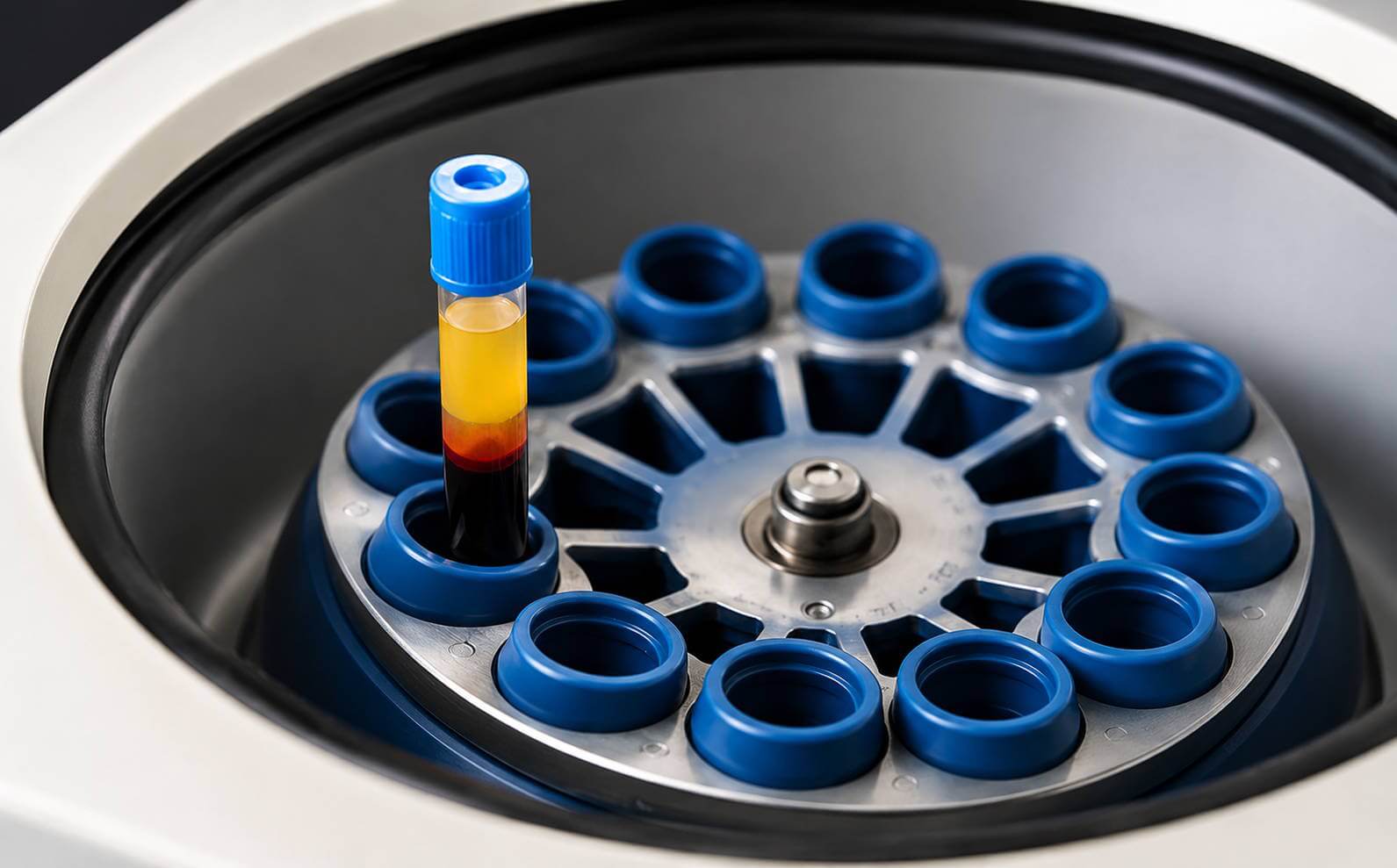
PRP stands for Platelet-Rich Plasma. It is made using a sample of your own blood. That sample is processed so the platelet-rich portion can be separated and concentrated, then used as part of a treatment plan recommended by the doctor. PRP is commonly described as a biologic treatment derived from the patient’s own blood and is used in a range of musculoskeletal settings.
Platelets are best known for their role in clotting, but they also contain growth factors and signaling proteins that are involved in the body’s healing response. The idea behind PRP is to place a concentrated platelet-rich preparation in the area being treated as part of a broader care plan.
In simple terms, PRP is a way of using your body’s own biologic material in a targeted, doctor-directed treatment approach.
How PRP Injections Work
While treatment details can vary from case to case, the general process usually includes:
1. Evaluation and Recommendation
Before anything is scheduled, the doctor determines whether PRP may be appropriate for your condition.
2. Appointment Scheduling
If PRP is recommended, the office can then schedule the injection appointment.
3. Consent & Blood Draw
Consent forms are reviewed with the patient and a sample of your blood is collected.
4. Processing
The blood is prepared so the platelet-rich portion can be concentrated.
5. Injection
The PRP is injected into the soft tissue.
This is why PRP should not be viewed like a routine walk-in service or something selected off a menu. It is a treatment decision made after proper evaluation.
Important Scheduling Information
We want this part to be as clear as possible.
PRP injections cannot be self-scheduled.
Patients must first be evaluated by the doctor, and PRP must be recommended before the office staff can book an injection appointment.
If you are a new patient:
Schedule a New Patient Exam/Consultation to discuss whether PRP may be appropriate for your condition.
If you are a current patient:
Talk with the doctor during your visit. If PRP is recommended, the office can then help schedule the appropriate appointment.
What Conditions May Be Evaluated for PRP?
PRP may be considered for certain orthopedic and soft tissue conditions, depending on the diagnosis, severity, history, and doctor recommendation.
At Davis Family Chiropractic, PRP may be discussed for conditions such as:
Joint Degeneration and Osteoarthritis
- Degenerative joint disease
- Hip osteoarthritis
- Knee osteoarthritis
- Ankle osteoarthritis
- Shoulder osteoarthritis
- Elbow osteoarthritis
- Wrist osteoarthritis
Tendon and Soft Tissue Conditions
- Chronic tendonitis
- Partial-thickness tears
- Rotator cuff irritation
- Biceps tendon problems
- Golfer’s elbow
- Tennis elbow
- Gluteus medius irritation
- Hamstring-related tendon problems
- Piriformis syndrome
- Patellar tendonitis
- Quadriceps tendonitis
- Peroneal tendon issues
- Tibialis posterior tendon issues
- Achilles tendon problems
- Plantar fasciitis
Ligament, Meniscus, and Labral Injuries
- Ulnar collateral ligament injury of the elbow
- Medial collateral ligament injury of the knee
- Meniscus injury
- Labral tears
PRP has been explored in orthopedics for conditions involving tendon, ligament, muscle, and joint problems, including some early knee osteoarthritis and sports medicine uses, though evidence is not identical across all conditions.
Not every condition listed above will automatically qualify for PRP treatment. This list is meant to help patients understand the kinds of problems that may lead to a regenerative medicine discussion.
Who Might Be a Candidate for PRP?
PRP may be worth discussing if you:
- have ongoing joint pain that keeps returning,
- are dealing with chronic tendon irritation,
- have a ligament or soft tissue injury that has been slow to improve,
- want to explore a non-surgical treatment discussion,
- or want to better understand whether regenerative medicine may fit into your care plan.
The right candidate is not determined by internet research alone. It is determined by the doctor after reviewing your symptoms, history, exam findings, and the specifics of your condition.
What PRP Is Not
This is an important distinction.
PRP is not a treatment that every patient needs.
It is not something patients directly schedule on their own.
And it is not automatically the best option for every joint, tendon, or ligament problem.
In some cases, the best recommendation may still be chiropractic care, rehabilitation, exercise guidance, soft tissue treatment, or another conservative approach. The goal is to recommend what makes the most sense for the individual patient, not force every case into the same treatment path.
Why Patients Ask About PRP
Patients usually start asking about PRP because they are trying to find answers for a problem that has lingered longer than expected.
They may be dealing with:
- arthritis-related joint pain,
- chronic overuse injuries,
- recurring irritation with activity,
- limitations in exercise, sports, or work,
- or a desire to better understand their non-surgical options.
That does not automatically mean PRP is the answer. It does mean the conversation may be worth having.
What to Expect Next
If you are interested in PRP, the next step is evaluation.
New Patients
Schedule a New Patient Exam/Consultation so the doctor can evaluate your condition and discuss whether PRP may be appropriate.
Current Patients
Ask the doctor during your visit whether PRP may be worth considering for your condition.
If PRP is recommended, the office can then schedule the injection appointment.
PRP vs. Other Regenerative Medicine Options
PRP is the regenerative medicine service we currently offer for select cases. We are also building educational resources for future treatment options, including PRP + Stem Cell injections, as those services become available.
As that section grows, patients will be able to compare:
- PRP
- Stem Cell-based options
- PRP + Stem Cell approaches
For now, the best place to begin is understanding whether PRP is even appropriate for your case first.
Frequently Asked Questions About PRP
Can I schedule a PRP injection online or directly through the office?
No. PRP injections are not direct-book appointments. Patients must first be evaluated by the doctor, and treatment must be recommended before an injection appointment can be scheduled.
I’m a new patient and interested in PRP. What should I do?
Schedule a New Patient Exam/Consultation. That visit is the right starting point for discussing candidacy.
I’m already a patient. Can I request PRP?
You can absolutely ask the doctor about it during your visit. If the doctor recommends PRP, the office can then schedule the appropriate appointment.
Does PRP work for every joint or tendon problem?
No. PRP is not a one-size-fits-all treatment. Whether it may be appropriate depends on the condition, the severity, your history, and the doctor’s clinical judgment.
Is PRP made from my own blood?
Yes. PRP is generally prepared from a patient’s own blood, which is processed to concentrate the platelet-rich portion before use.
Is PRP the same thing as stem cell therapy?
No. PRP and stem cell-based therapies are different treatment categories. We will have a separate comparison page for that section.
Ready to Learn Whether PRP May Be Right for You?
If you are interested in PRP injections, the first step is getting the right evaluation.
New patients: Schedule a New Patient Exam/Consultation
Current patients: Ask the doctor during your visit whether PRP may be appropriate for your condition
Call Davis Family Chiropractic at (440) 624-4214 to get started.