Chiropractic Care
A Modern Patient Guide
What chiropractic is, what an adjustment may involve, when it may help, and what to expect at your first visit.
Many people first visit a chiropractor because back pain, neck stiffness, headaches, or an injury has started interfering with work, sleep, exercise, or everyday life. Others are simply unsure what chiropractic care involves and want a clear explanation before scheduling. This guide answers the questions patients ask most often.
What is Chiropractic Care?
Chiropractic is a licensed health profession focused primarily on the musculoskeletal system, particularly the spine, joints, muscles, and their relationship to movement and pain. Chiropractors commonly use spinal manipulation or mobilization, exercise recommendations, soft-tissue techniques, and lifestyle or ergonomic guidance.
A chiropractic adjustment is a controlled movement applied to a joint. Depending on the patient and technique, it may be performed by hand or with an instrument. The goal is generally to improve joint motion, reduce irritation, and help the patient move with less discomfort.
What Problems Do Chiropractors Commonly Evaluate?
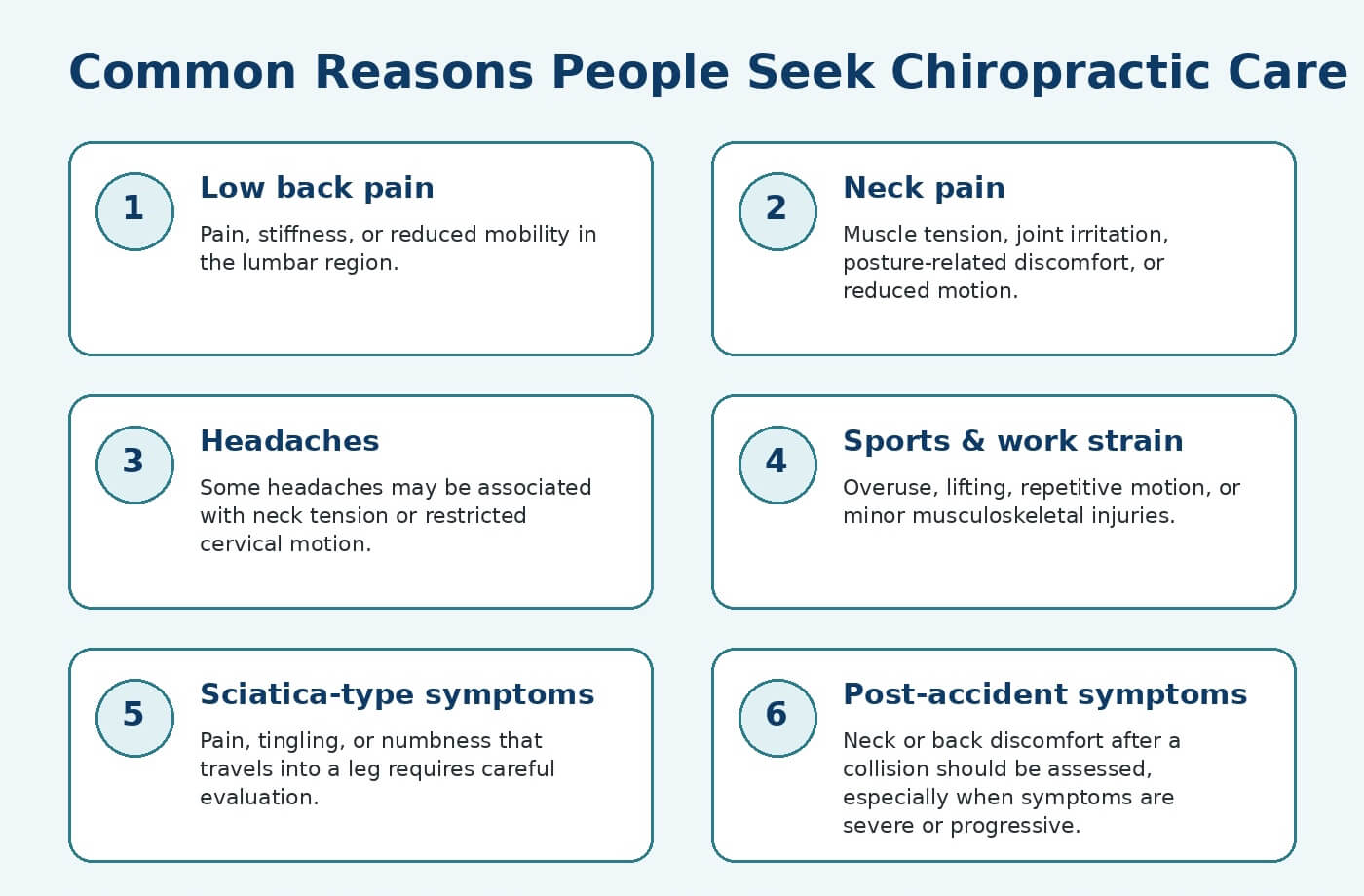
People most often seek chiropractic care for low back pain, neck pain, headaches associated with neck tension, stiffness, reduced range of motion, sciatica-type symptoms, and musculoskeletal pain following work, sports, or automobile injuries.
That does not mean every symptom is appropriate for chiropractic treatment. Pain may come from muscles, joints, ligaments, discs, nerves, fractures, inflammatory disease, infection, or other medical conditions. A responsible examination looks for signs that conservative care may help and signs that another type of evaluation is needed.
Why Can Back Pain Seem to Start Suddenly?
An episode of back pain may feel as though it appeared in a single moment—perhaps while tying a shoe, getting out of bed, lifting a laundry basket, or turning quickly. Sometimes there is a clear injury. In other cases, the painful moment may be the final stress placed on tissues already irritated by repetitive movement, prolonged sitting, deconditioning, poor lifting mechanics, or accumulated strain.
Because the cause is not always obvious, an examination is more useful than assuming a bone is simply “out of place.” The clinician may evaluate joint motion, muscle tenderness, nerve-related symptoms, strength, reflexes, posture, and movements that reproduce or relieve the pain.
What Does a Chiropractic Adjustment Feel Like?
Most adjustments are brief. Patients may feel pressure, stretching, or a quick movement. A popping sound can occur when gas shifts within a joint, but the sound is not required for an adjustment to be effective.
Some people experience temporary soreness, fatigue, or a mild headache after spinal manipulation. Serious complications are uncommon, but no health procedure is risk-free. Neck manipulation has been associated with rare cervical artery injuries, so a careful history and screening are important, especially when a patient reports a sudden unusual headache, neurologic symptoms, or other warning signs.
What Other Treatments May Be Used?
Chiropractic care may include more than adjustments. Depending on the diagnosis and the chiropractor’s training, a care plan may use gentle mobilization, soft-tissue therapy, stretching, therapeutic exercise, posture or workstation advice, heat or cold, traction, or other supportive therapies.
The most useful plan is usually active rather than passive. Treatment should help the patient understand the problem, gradually resume normal activity, build strength or mobility where needed, and reduce the likelihood of recurring flare-ups.
What Is a Herniated or Bulging Disc?
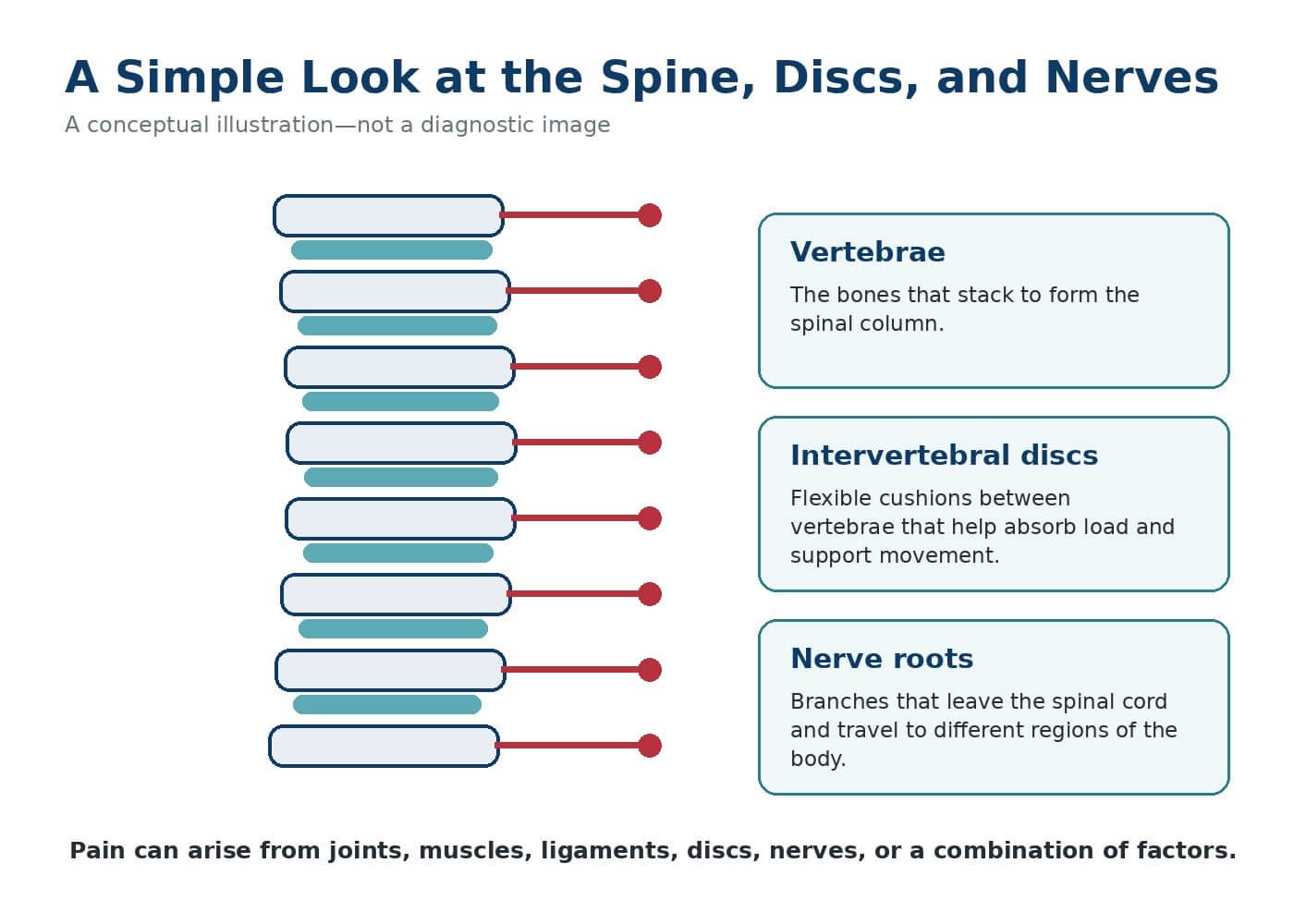
Spinal discs sit between vertebrae and help cushion movement. A disc has a softer inner material and a tougher outer layer. A herniation occurs when inner material pushes through a tear or weakened area in the outer layer. A bulging disc is a broader extension of the disc’s outer contour.
Disc changes do not always cause symptoms. When a disc irritates a nearby nerve, a person may experience pain, burning, tingling, numbness, or weakness in an arm or leg. Severe or progressive weakness, loss of bowel or bladder control, or numbness in the saddle area requires urgent medical evaluation.
What Is Whiplash?
Whiplash is a neck injury associated with rapid acceleration and deceleration, often during a rear-end collision but also during sports, falls, or other impacts. Symptoms can include neck pain, stiffness, headache, shoulder or upper-back discomfort, dizziness, or arm symptoms.
Symptoms are not always immediate. Anyone with significant pain, neurologic symptoms, confusion, severe headache, weakness, or worsening symptoms after a collision should be evaluated promptly. Care may involve reassurance, gradual movement, exercise, manual therapy, medication from an appropriate medical professional, or referral depending on the findings.
Does Posture Matter?
Posture is one factor among many. There is no single “perfect” posture that prevents all pain, and posture alone does not explain every symptom. However, staying in one position for long periods can fatigue muscles and aggravate sensitive joints or tissues.
Frequent position changes, an adjustable workstation, regular walking, and enough strength and mobility to tolerate daily tasks are often more practical than trying to hold a rigid posture all day.
What Happens at the First Visit?
A first visit generally begins with a discussion of the current problem, health history, medications, prior injuries, and the patient’s goals. The examination may include posture, range of motion, palpation, orthopedic testing, strength, reflexes, sensation, balance, or other neurologic checks.
Imaging is not automatically required for every case of back or neck pain. It may be appropriate when the history or examination suggests fracture, serious disease, progressive neurologic loss, or another concern that would change treatment. After the evaluation, the chiropractor should explain the findings, reasonable options, expected benefits, possible risks, and whether referral is indicated.
When Should You Seek Urgent Medical Care?
Seek prompt medical attention for new bowel or bladder problems; numbness around the groin or saddle region; severe or rapidly progressing weakness; fever with spinal pain; unexplained weight loss; major trauma; chest pain; sudden severe headache; fainting; difficulty speaking; facial droop; loss of coordination; or other symptoms that could indicate a medical emergency.
Chiropractic care works best when it is part of responsible healthcare—using conservative treatment when appropriate and referring quickly when the symptoms point elsewhere.
Choosing the Right Chiropractic Plan
A good care plan is individualized, understandable, and periodically reassessed. Ask what the working diagnosis is, what improvement should look like, how progress will be measured, and what alternatives exist.
For many patients with uncomplicated musculoskeletal pain, chiropractic care can be one reasonable non-drug option. The best results often come from combining appropriate hands-on care with movement, exercise, sleep, stress management, and practical changes at work or home.
Schedule an Evaluation at Davis Family Chiropractic
If back pain, neck pain, headaches, stiffness, sciatica-type symptoms, or a recent injury is limiting your day, Davis Family Chiropractic can evaluate the problem and discuss whether chiropractic care is appropriate for you.
Call (440) 624-4214 or use the online scheduling page to request an appointment at 1484 OH-46 N, Suite 7, Jefferson, Ohio.