Early spinal check-ups for children can spot small imbalances before they turn into bigger problems. When we catch posture issues early, we can teach kids how to move better, support healthy growth, lower their risk of injury, and set them up for a lifetime of stronger, more resilient spines.
At Davis Family Chiropractic in Jefferson, Ohio, we see every day how much posture influences the way kids feel, move, play sports, and concentrate at school.
What do we really mean by “good posture”?
Most of us hear “Sit up straight!” and think posture is just about looking confident or “not slouching.” But posture is much more than that.
Healthy posture is the way your child’s body lines up when the joints, muscles, and spine are in a balanced position. In this state:
Muscles don’t have to overwork just to hold them upright
Joints are loaded evenly instead of being overloaded in certain spots
The spine’s natural curves are supported, not flattened or exaggerated
Movement feels easier and more efficient
Good posture isn’t about being perfectly rigid. It’s about balance, efficiency, and letting the body do its job with as little strain as possible.
Why posture in childhood shapes lifelong health
Good posture helps:
Distribute body weight and forces evenly across muscles and joints
Reduce wear and tear on growing joints and discs
Support better breathing and energy levels
Lower the risk of overuse injuries, sprains, and early degeneration
Every child is born with their own unique structure. No one is perfectly symmetrical. Add in:
Falls and tumbles
Heavy backpacks
One-sided sports (like baseball, softball, or volleyball)
Sitting with devices for long periods
…and those small imbalances can grow over time.
Think of it like a car with the front end just slightly out of alignment: you may not notice it at first, but over time one tire wears out faster. Your child’s body is similar. When posture is off, certain tissues are forced to handle more stress than they’re built for, which can lead to:
Pain or soreness
Compensatory movement patterns
Early joint and disc changes
Higher long-term healthcare costs
A simple principle: how much stress can a tissue handle?
There’s a basic concept we use every day in chiropractic care:
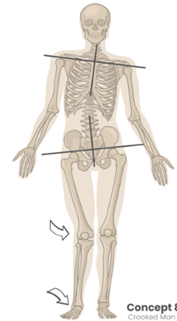
When the stress placed on a tissue exceeds what that tissue can handle, the body starts to adapt and compensate.
Sometimes those compensations are obvious—limping after an ankle sprain, for example. But other times they’re subtle: a tilted pelvis, a hip that sits higher than the other, a shoulder that rounds forward, a head that sits just a bit too far in front of the shoulders.
That’s why our goal at Davis Family Chiropractic isn’t just to chase pain.
We focus on:
Finding areas of abnormal stress and imbalance
Identifying how your child’s body is compensating
Correcting alignment and movement before it turns into chronic problems
Chiropractic exams, postural assessments, and movement testing allow us to see what’s happening beneath the surface—even if your child isn’t complaining of pain yet.
What healthy posture looks like in children
Here’s what we look for when evaluating posture in kids.
When standing, a child with healthy posture will generally have:
Head level, not tipped forward or backward
Ears roughly over the shoulders (not way out in front)
Shoulders relaxed and back, not rounded or hunched
Chest open, not collapsed in
Spine maintaining its natural curves:
Neck: gentle inward curve
Mid-back: gentle outward curve
Low back: gentle inward curve
Pelvis relatively level and neutral (not dramatically tilted)
Knees tracking over the feet
Weight carried evenly on both feet
The reality? Very few kids check every single box perfectly—and that’s okay. The goal isn’t perfection, but balanced, functional posture that supports healthy growth.
The neck, “tech neck,” and the rest of the body
The neck gets a lot of attention these days, especially with how often kids are on phones, tablets, and computers. “Tech neck” or “text neck” describes the forward-head posture that happens when kids spend long periods looking down at screens.
But the neck doesn’t exist in isolation. It’s part of a chain.
Imbalances can start from the ground up:
Foot and ankle mechanics
Knee alignment
Hip and pelvic positioning
Low back curvature
The neck often compensates for what’s happening below. If the foundation is off, the head and neck will shift in whatever way helps the body keep its balance—even if that means more stress on the neck and upper back.
That’s why, at Davis Family Chiropractic, a neck complaint doesn’t just get a “neck-only” exam. We assess:
Posture from head to toe
Spinal alignment
Muscle balance and flexibility
How the child moves, bends, and walks
This whole-body approach helps us address the true cause, not just the most obvious symptom.
When should kids get a posture and spinal check?
While any child with pain, recurring sports injuries, or visible posture changes should be evaluated, we recommend:
Baseline posture and spinal checks starting around age 10–12
Follow-up exams during growth spurts (those rapid height changes can really magnify imbalances)
Extra attention for young athletes, especially in contact sports or one-sided sports
Earlier doesn’t hurt—many parents choose to have their children checked much younger, especially if they’ve had significant falls, sports injuries, or if spinal issues run in the family.
How Davis Family Chiropractic helps protect kids’ posture
At our Jefferson office, posture and spinal alignment are part of a bigger picture: helping kids grow up healthier, more resilient, and more active.
A typical pediatric posture and spinal evaluation may include:
Health and activity history
Visual posture assessment from the front, side, and back
Range-of-motion and movement testing
Palpation (feeling how the joints and muscles are moving)
Orthopedic and neurological checks as needed
Referral for additional evaluation if something more serious is suspected
Based on what we find, we may recommend:
Gentle chiropractic adjustments tailored to your child’s age and size
Specific stretches and strengthening exercises
Tips for backpack use, sports mechanics, and safer screen time posture
Periodic re-checks to monitor growth and progress
The goal is not just to “fix” something once and forget about it. Posture and spinal health are ongoing processes, especially as kids grow, change sports, and spend more time on schoolwork and screens.
Making posture a family priority
Posture isn’t something kids can fix with one reminder to “sit up straight.” It’s a habit we build over time, supported by good structure and movement.
Parents can help by:
Encouraging breaks from screens and devices
Making sure backpacks are fitted well and not overloaded
Promoting regular physical activity and cross-training, not just one repetitive sport
Watching for early signs: one shoulder higher, persistent slouching, frequent “growing pains,” headaches, or back/neck complaints
Chiropractic care adds another layer of support by:
Detecting small problems before they become big ones
Correcting misalignments that kids can’t “will away” with posture cues
Guiding families with home exercises and ergonomics that match their child’s unique body
Over time, this combination means fewer injuries, less missed school and sports, and better quality of life.
Children’s Posture FAQs
Why does posture matter for children?
Healthy posture helps:
Spread load across the body instead of overloading one area
Protect joints, discs, and growing muscles
Support better breathing, focus, and energy
Lower the risk of injuries and long-term wear and tear as your child grows
It’s not just about looking “straight”—it’s about helping their body work the way it was designed to.
When should kids get a posture exam?
We suggest:
A detailed posture and spinal exam around age 10–12
Repeats during growth spurts or big changes in activity (like starting a new sport)
Immediate evaluation if your child has recurring pain, headaches, visible posture changes, frequent sprains/strains, or “growing pains” that don’t resolve
Early screening allows us to catch imbalances before pain sets in, so we can support healthier alignment over the long term.
What happens during a posture and spinal check at Davis Family Chiropractic?
At Davis Family Chiropractic, a pediatric posture visit may include:
A conversation about your child’s health, sports, school, and screen time
Spinal, joint, and muscle evaluations
Movement tests to see how the body functions, not just how it looks
Orthopedic and neurological checks as needed
Home care, exercise, and activity recommendations tailored to your child
From there, we create personalized recommendations—this might include gentle adjustments, exercises, stretches, or lifestyle changes to support better posture.
Who should evaluate and correct posture problems?
Chiropractors are uniquely trained to:
Evaluate the spine, joints, muscles, and nervous system together
Identify structural imbalances and compensations
Provide hands-on adjustments and tailored rehab exercises
At Davis Family Chiropractic, our doctors work with children, teens, and adults to build better posture and stronger movement patterns—whether your child is an athlete, a dedicated gamer, a musician, or just growing fast.
If you’d like to have your child’s spine checked, we’re here to help.
Call (440) 624-4214 or schedule online.